Sunday, 18 February 2024

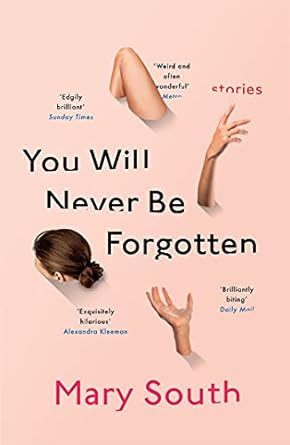
"You Will Never Be Forgotten" by Mary South (2021)


A collection of sci-fi-peppered short stories about the bond between two persons joined by their shared context [a caregiver and a patient/ an interviewer and an interviewee/ a mother and a daughter/ etc] and 
the effects of this relationship on both of them. The focus of these stories revolves around themes of grief and coping, individualism, disappointment, motherhood, and love.

There's a pronounced structure to South's style where she dunks the reader right into the world of the story before she slowly and methodically unveils the mystery. This unique approach 'contrigued' me; it sort of confused me as well as intrigued me. 

One of the issues I've had was the diction used. I thought it was a bit... ornate not purple– just a bit stylistic. 

Mary South is a truly capable writer. She's got the diction, the style, the imagination, the guts to experiment. Yet, something is missing. This book felt unreachable. I couldn't relate to the characters or the stories on a deeper level. It wasn't a matter of soullessness. The stories have a heart, but the beating is so low, it's barely perceptible. What led me to this feeling was the gamble of the skeleton of the story. The structure and mood of the stories promised shock, plot twists, something, anything, but all I got were flat denouements leading the characters into realization-recognition-acknowledgment-acceptance of their situations. I'm not saying this is bad. Realism is necessary when talking about human relationships, but promising something and not keeping it. That is bad. It's like watching a movie trailer and getting hyped over the action scenes, but when the movie comes out, it turns out we were tricked by false advertising.
_____________________________

My impressions of each one of the stories:

Keith Prime: (2.5)

In a world in the future where human bodies are harvested from donors of benighted clones called Keiths, a nurse gets attached to a particular Keith with a mole. 

Nothing fancy happens here. The light humor is sweet.


The Age of Love: (3.5)

A male nurse works at a home to care for convalescents when his coworker tells him about the sex calls the old people make.

It's got the whole package of a good story. It's funny and dirty and warm and sad.


Frequently Asked Questions About Craniotomy: (1.5)

A pamphlet, a brochure, an interview (?) of FAQ about brain surgery subjectively answered by a surgeon dealing with grief and disappointment.

Darkly humorous. Painfully sad. Infinitely boring.


Architecture For Monsters: (1)

A former master's degree student's article about a leading female figure in the field of architecture who used to be his teacher.

The prose was so purple, it bullied my intellect.


The Promised Hostel: (2)

A bunch of backpackers breastfeed from a woman called Madeline. 

This is weird and perverse!


You Will Never Be Forgotten: (3.5)

A female content moderator develops an obsession with her rapist who works for a prestigious seed fund in Silicon Valley.

Humorous. Satirical. Realistic. So Black Mirror. So Murakamian. Loved it!


Camp Jabberwocky For Recovering Internet Trolls: (2.5)

A rehab camp for online trollers where one of the teens decides to run away and his friends go into a wild goose chase trying to find him.

Light-hearted. Funny. Insightful. 


To Save The Universe, We Also Must Save Our Selves: (1.5)

Fans are obsessed with a show called Starship Uprising and its leading actress.

Didn't click.


Realtor to the Damned: (1)

A realtor selling houses of the elderly inventing stories for self amusement.

A story about grief. 


Not Setsuko: (4)

A couple loses their daughter and decides to make a clone out of her, but the reconstruction of the daughter's memories has produced a different copy.

My best! The composition is perfection. The main theme echoes throughout the story. And the ending was exactly what I needed.


________________________________

Summary:

The stories are a hit-or-miss due to their structure and the presentation of the climax. Some will resonate with readers. Most will not. If you decide to read the book, go for Not Sesuko/ You Will Never Be Missed.


CW: animal abuse/ child abuse/ incest/ graphic content and language

Friday, 9 February 2024

"The Silence" by DeLillo (2020)


The master of 'show but not not' did it again... or didn't. Anyway, in this novel, DeLillo is concerned about one question: "What happens when people live inside their phones?"

The story is straightforward, no side-tracks, no leeways. Jim and Tessa are on a flight from Paris en route to NY to meet their friends and become stranded in their apartment when an event of an apocalyptic scale disables anything electronic and digitized and submerges the globe in total silence. 

Not making it to the headlines, the catastrophe remains nameless and open to speculation: selective internet apocalypse/ communication screwup/ a mass power station failure/ cyberattack/ digital intrusion/ deviation in nature/ etc. The event is more like an undertow to the story, white noise in the background. 

It's not important. 

What matters here are the interactions of the characters themselves and how they first absorb the shock and adjust to the new reality as they fill in the silence by either 'talking talking talking' for the sake of talking or staring at the blank, black surfaces of their mobile phones and tablets and TVs, or engaging in awkward conversations, realizing that 'each has become a mystery to the others', strangers in a strange world. And, paradoxically enough, some others are rejoicing as they 'accepted the shutdown' when Max says 'All my life I've been waiting for this without knowing' which instantly reminded me of Haruki Murakami's 'Everyone, deep in their hearts, is waiting for the end of the world to happen'.


The first third of the book was rough and bumpy. The exposition and dialogues were extremely and painfully jarring as the narrative 'skipped and skidded for a while' just like the plane crash landing. The reading experience felt like a bunch of AIs making snippets of exchanges. I admit, DeLillo is brilliant at the sentence level, but so terrible at the conversation level. Eighty+ years and he doesn't know how normal chit-chat works. I'm not making that up, and he sort of admits it, "much of what the couple said to each other seemed to be a function of some automated process". Luckily, when I got over the state of 'totally impaired orientation' and got a sense of the context, I felt that dread before the disaster, that restless calm before the calamity, that thrill of mixed curiosity and anticipation and elation when something truly bad somewhere is happening and we're at its fringes, safe and not safe.

If DeLillo was aiming for the readers to feel these two distinct feelings on purposegrowing distant from the characters' dysfunctional interactions at the beginning and vicariously relating to their experiences laterthen, I believe, the master of 'show but not tell' did it again. The two different impressions mimic the shock and the aftershock: first, you're feeling confused and don't know what's happening, but after the event is over, you begin to rationalize what has just happened.

Brilliant!

__________________________________

Summary:

Don DeLillo's The Silence is 90% similar to Ruman Alam's Leave the World Behind, or is it the other way around? That's weird since both of these books were published in the same year, 2020. Or perhaps the collective panicking caused by the COVID-19 outbreak in 2019 was to blame. Regardless, The Silence concerns itself more with the prevalent, chronic dependency on technology rather than the event that caused its shutdown.

Forget the low reviews, go for it blindly, and make up your own impression of it. Personally, I found it subtle and smart. DeLillo is treating prose as an impressionist, sprinkling ideas here and there, and it's up to the readers to make a picture that makes sense to them.

Wednesday, 7 February 2024

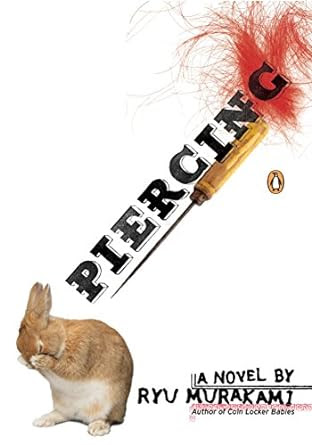
"Piercing" by Ryu Murakami (2008)


A psychological thriller of protagonists with flawed logic about channeling traumatic experiences. It's dark definately and not everyone might stomach the themes discussed here and the graphic descriptions.

I wouldn't say this was Ryu Murakami's best, but what made a positive impression on me was the structure where the narrative hops between the two protagonists and lets us see the world through their eyes.


Monday, 5 February 2024

"Earthlings" by Sayaka Murata (2020)


"Earthlings. This is a funny word I haven't heard of in ages," I thought to myself. "Kinda reminding me of The Hitchhikers Guide to the Galaxy. I'm so digging it." 

So, I started reading it right away, and my thoughts of it were like: 
Ohh, a nice family reunion. Japanese mountains. Festivals. Lanterns. Ancestors. Oh, a boy meets a girl. How cute! How adorable! Huh! We're back to cram school. It's okay. We still got our friend. We'll see fireworks and dress in yugata kimonos. Plus. The teacher is nice and handsome like those boy bands and... wait just sec. What's that h— OH MY GOD! This isn't happening! What the flying fuck is happening?! I didn't see that coming. Nope! That escalated waaaay too fast, I donno what to feel!!!
I wish it stopped at that, but no, it was just getting started.


Earthlings is seriously not for the faint-hearted. What makes it so is how easy-going and straightforward the prose and narrative style are, so straightforward to the point that the book splashes the reader's face with things unimaginable matter-of-factly, and then says, 'Deal with it.'

There were a few instances when I literally dreaded reading forward because the story was too much for me. Earthlings tops this list without dispute. It has this inviting atmosphere that makes you feel relaxed and cozy, and actually want to be living in that world, but then, without a hint, it catches you off guard and twists your psyche in horrible ways. But that is the point, the trap, the lure, isn't it? How else the shock value would be quadrupled in effect? 


Anyway, satire works best if writers blow the characters and their actions out of proportion so they can highlight the themes discussed. Clearly, Murata is just so fed up with society's values, and its assessment of one's worth: how should they dress, eat, talk, act, sleep with another, etc. It's predeterminism vs free will. Are we truly free to do whatever we want, and to what extent, or are we slaves not just to our genes but to society's rules, to what she refers to as 'the Factory' whose sole purpose is to produce babies who will grow up to produce more babies, sort of like living life just for the sake of living life?

In this sense, the book can be looked upon as an example of escapism. Think of it as Into the Wild minus all the disturbing stuff, where the protagonist feels alienated and longs for a basic, two-dimensional understanding of the universe, where s/he yearns to return to the roots of nature, and shed all of humanity behind and all its confusing rules and constrictions by committing the unthinkable.

________________________________
Summary:

Why do you have to be so weird, Japan?!

Friday, 2 February 2024

"Bunny" by Mona Awad (2019)


Surreal, absurd, satirical, and not in the least entertaining. It's a trap book that everyone cheered for and appraised which prompted me to give it a try and see what's what. 

I wish I hadn't.

On second thought...

I'm glad I had.

But then again...

It's not even worth considering.

All I can say is it was a love-hate relationship, or perhaps, a mildly tolerant-hate relationship. Sometimes I wanted to gut the book and set it on fire. Sometimes I thought it was onto something of some worth. But mostly, I wanted to just use it as toilet paper. 


There are two layers to the story: the literal and the metaphorical. Literally, it's about self-conscious, passive-aggressive, deeply troubled Samantha who is a grad student in an avante-garde school called Warren for creative writing. She's the black duck of her girl cohort in an MFT program as she tries so hardbut doesn't admit itto fit in with a bunch of 'mean girls' who are in some sort of a cult, who are waaaay over the top with their girly attachment to each other, cooing and hugging and eating everything tiny and cute. The cult is sort of like A-ha's take on me as the girls turn bunnies into human boys which symbolizes writing drafts.

Metaphorically, however, Bunny is about the process of creative writing while being self-aware and self-critical of one's work. In essence, Bunny is about a real-life writer writing about writing whereas a grad student writer is having a block and writing about writing.


The premise sounds promising but the execution didn't catch up to it. Many things stood in the way. Throughout the book, Awad was trying—let me add—too hard to slough off the vernacular of nowadays prose, the overused cliches, the exhausted molds of dialogue dynamics, of plot progression, and came up with expressions that were unique and creative, but, sadly, they came out weird, awkward, and ill-fitting. I know. I know. This might be an exaggeration on my part... not as exaggerated as Awad's attempt at the avant-garde and completely going off the rails. For example, "She is cherry blossoms falling. She is serious moonlight. She is shivering green leaves." Seriously! Who writes like that?! The reading experience wasn't fun; it felt like reading the scribbles of a toddler. My cringe spectrum was maxed out in this book, it made me feel like a spider curling up. And the abusive use of similes was just on another level.

__________________________________

Summary:

Apparently, this isn't my cuppa tea, but it might be for others. I realized I was not the target audience. That's why it didn't click on me. If you're up for a millennial, washed-down version of Chuck Palahniuk's style on drugs, then, sure, go for it.

Sunday, 28 January 2024

"The Committed" by Viet Thanh Nguyen "2021"


The Committed is the second book of the series of The Sympathizer. It picks up where we left the protagonist, Vo Danh (nameless), in the first book on his way to Paris as he and his blood brother, Bon, attempted to flee the now communist Vietnam in search of a life in the land of his father. 

By far, this is my most maimed book; marks and notes are all over it. Luckily, it's a digital copy. Anyway. This book is dense and juicy, oozing with big ideas. If I could, I would've highlighted the whole thing.

The Committed is different from The Sympathizer when it comes to the purpose of the main guy. In the first book, he is a spy with a broad mission to inform on any insurgencies by the American-backed-up South Vietnamese in America. In this book, he's no longer tied to anything. He roams the world wherever the wind stirs him. He's purposeless in a meaningless world.

The protagonist is on a relentless hunt for the truth, principles, for idealism, for something to rely on that is inherently good and solid and unchanging, for consistency. That's why he keeps shifting and changing his beliefs over and over: from catholicism to atheism (because, perhaps, of his pedophilic father who neglected and disavowed him), from communism to a capitalist drug dealer (because of the Viet Cong's reeducation program). So he's an ex-theist, ex-commie, ex-mole, ex-something. The guy, according to Juan Cortez from Far Cry 6, 'got more ex's than anyone's porn search history.' 

Throughout the book, Vo Danh isn't anywhere near satisfaction. And it's quite normal because what he's looking for is something akin to a fairy tale, a holy grail, a fountain of youth sort of a pursuit, because it's ideal, and everything ideal is prone to corruption. There's no black and white. "Corruption is a way of life... That’s how the world spins, gives us night and day." He believed in revolution and communism because "capitalism has become the worst version." i.e. it became corrupt. And when the heavy price was paid for the revolution to succeed, he was shocked to see what he's been fighting for turn into what he's fighting all along. "three million people dead for this revolution? We had simply traded one Repressive State Apparatus for another one, and the only difference was that it was our own."

The moral of the story: do not draw a halo on anyone or anything and idolize it because 'nothing is sacred! Everything can be transgressed'.

_____________________________

Summary:

There's a saying that goes 'If you don't want to offend anyone, don't talk about either politics or religion'. The Committed is anything but politics and religion. So, if you're easily offended by these topics, this book is definitely not for you. Viet Thanh Nguyen has a voice that is powerful, shameless, and unapologetic. 

The series is a feast for philoso-philias, a platform for political debates, and a hell of an entertainment show of dark humor and cynical absurdities.


Thursday, 18 January 2024

"The Sympathizer" by Viet Thanh Nguyen (2015)


As the bloody, merciless conflict in the Gaza Strip continues, I became more interested in observing parallels between the war there and what happened in Vietnam. I didn't want to read about the American perspective, but mainly was interested in reading the Vietnamese. Hence, my choice of reading this book regardless of its prizes won and its glowing reviews.

I must admit, I was intimidated by the book's number of pages and how densely the words populated each one, particularly when its pace was similar to an 'arithmetic tortoise', and most especially, when the dialogues were crammed with full-blown musings and flashbacks. But as I went on, I realized I wrongly approached the book. It wasn't about an action-spiced spy novel more than a reflection on the reality of the people living in the war-torn leftovers of a country. It provides a thorough psychological and analytical account of wars, occupations, freedom, and most especially, of revolutions/ideologies and how they embody the concept of Harvey Dent's "You either die a hero or live long enough to see yourself become the villain".

With that being said, I can safely say that The Sympathizer is more than just a novel. It refuses to be bound by the perimeters of its pages and cover. It goes beyond, waaaay beyond. This is life (with all its happiness and tragedies and laughter and agony) perfectly encapsulated in the form of a novel. Viet Thanh Nguyen took me by surprise. His voice is crystal clear and strong and, dare I say it, is fairly equal to one deserving of the Nobel Prize. Heck! His voice is a character of its own. (either he was projecting or not). There's a perceptible fluidity in the structure of his jokes and an eclectic fluency in his words and phrases. 

The book was brilliant up to 50% then dropped to quite boring between 50-80% then aimed for the stars and became a masterpiece in the last 20%. 

There are unforgettable moments during the book where I literally laughed out loud (the poor squid scene for example) and moments where all ambient sounds and lights around me were gone because those scenes were so intense and painfully graphic.

Viet Nguyen has proved himself to be a master storyteller who's able to convey his thoughts in an entertaining and engaging manner, and one who isn't afraid to experiment with style and narration (as long as it serves a valid purpose), shifting from a realist approach to a quasi-surreal one, or from second perspective to a third.

What really blew my mind was the central scene of the raping of the agent. Yes, it's despicable and horrendous and all, but beneath the physical and the literal, there's one of the most powerful metaphors I've ever read. It's all about Vietnam, that beautiful ripe country, and what has been done to her, by outsider colonialists (the French), their 'freedom spreaders' replacements (the Americans), and sadly but quite naturally, by the Vietnamese people themselves (communists or otherwise).

"The world watched what happened to our country and most of the world did nothing. Not only that—they also took great pleasure in it. You are no exception."


It's not about the American/Vietnamese war, about the atrocities committed in the name of ideological purging (namely the rise of communism), oraccording to the narratorin the name of freedom and independence (the Viet Cong). It's not about the millions of lives wasted on both sides. It's not about the Fall of Saigon or the Liberation of Saigon. It's about what such a pointless war has done to the people of Vietnam regardless of their position. And no one can truly see the crux of the matter unless they are of two minds, a sympathizer. That's the brilliance of the book. It doesn't tell you that the narrator is pro-anything. Is he a true communist? An Americanized Asian? A spy? For whom exactly? Don't know. Don't care. What matters here is that when he commits to a side, he tells it as it is. No tints. No shades. Just the plain truth.

______________________________

Summary:

The Sympathizer is an instant classic that should be read, dissected, and analyzed. It's rich in metaphors that are accessible to the common reader. It's a story by the people suffering for the people suffering. There are so many things the book wants to confess to the readers, things about art and propaganda, about maternal complex, about wars and suffering, but the central theme is the duality of perspective, to see things objectively. Hence, the metaphor of the main character as having two minds, two ways of thinking, two convictions... just like Vietnam, north of south.

Wednesday, 3 January 2024

"Mister Magic" by Kiersten White (2023)


My first book by White. Saw it on the thriller nominations for Goodreads Awards. Thought to myself why not give it a try, especially when it's labeled as a horror story. But before I write down my thoughts on it, there's something I need to get off my chest: I have a phobia of children's programs, particularly those with puppets or costumes. There I said it! They're unnatural and weird and extremely disturbing. To think of making a thriller/suspense out of a kids' show is diabolical... and smart.

Or so I thought...

Without spoiling anything Mister Magic is basically a coming-of-age story gone wrong. It's about a podcast reunion of a group of adults who used to be child stars on a show called Mister Magic.

I had issues with the omnipresent narration and White's style of writing, but I got over them later on. There are vibes from The Truman Show - Coraline - and especially IT. The characters were well-defined, but I think Javi was the best. 

As I went on with the story, I couldn't help but feel an insidious feeling crawling beneath my skin and thoughts. I wanted to know what the hell was going on. I wanted to look for reviews to see what this was all about and spare myself the agony of feeling confused and lost. That feeling was so alluring but gut-wrenching. It's like something 'caught at the back of [my] throat like mucus [I] couldn't clear'.
the mood then shifted from insidious to absurd to pure fantasy to a chaos of words and scenes and emotions. And I meant it not in a good way.

What I didn't like was the heavy emphasis on talking ambiguously and abstractedly and on generalities. It's the Lost TV show syndrome all over again.  No. It doesn't pique the readers' interest more than confuse and distract them.  No wonder why many reviewers couldn't go past the first third. The problem with this technique is that it promises you something grand and jaw-dropping, but when I reached the last third [which was the most boring pile of shit I've ever read after Ulysses], I realized I got scammed and cheated on. The ending was so stretched out and so abstract and so boring. 

It just drags... on and on and on. 

I got the message or what you wanted to say White, but damn, the writing was just awful. Sorry.


[WARNING: thematic spoilers]
What I really liked about Mister Magic was its themes, however poorly and broadly they were executed. Talk about the influence of media on the spongy psyche of children... the fine line between parenting and indoctrination... media exploitation of children and the trauma they might suffer afterward... the archetypes and assumed gender roles... memory and how subjective and sometimes manipulative it can be... childhood and creativity.
 
Yeah... it's a whole lotta themes out there! 

And that's where the book fails. A good book talks about a central theme and avoids being divergent and in the process loses the interest of its readers... just like it did to me.


Sunday, 31 December 2023

"The Only One Left" by Riley Sager (2023)


This is my third book from Sager (Lock Every Door being the first, and The Last Time I Lied the second). I can now, like 100%, say that Sager has truly mastered the art of thriller storytelling. He knows exactly how to steer the dynamics of his plots in ways that amplify the sense of shock and mindblowingness. 


I appreciate the structure where the main storyline happens in regular, linear chapters intercepted by another storyline of what actually took place. When it comes to the interconnectedness between the two timelines, it was so well done. I was even tempted to only read the interludes but, for the best, I chose differently.


However, The Last One Left didn't sink in me the way Sager's other books did. Don't get me wrong. It's good and it could be great for some other readers. But personally, the book didn't feel serious enough or rather felt cartoonish enough the way Josephine Anwhistle's house (in Lemony Snicket's The Wide Window) stood upon the cliff, all ricketty and crooked and slanted. And the 'plot conveniences' or 'the deus ex machinas' were so much, the whole thing could've collapsed if one was taken out. 


________________________

Summary:

I've been looking forward to this one. It's really, like really, a page-turner with some good plot twists, however mild and cliche-like they are. There are some subjective points that stood in my way of immersion and completely prevented me from enjoying it, but overall, it's an entertaining book that aims to be consumed rather than leaving a noticeable mark on its readers.


"We Spread" by Iain Reid (2022)


I don’t know which one is more frightening, fear of death or losing your memories through dementia. This book is everything I didn’t want to read about in my current state—suffering from a killer routine where days and nights keep looping and looping seamlessly. That’s why I could relate to Penny. Perhaps, way too much to the point where the book pushed me away. Such a shame, really. I wanted to love this one as much as I enjoyed Ian’s first two books. But I wasn’t in the right frame of mind to read something like that. Don’t get me wrong. There’s absolutely nothing wrong with this one. Yes, it’s predictable from page one, but it was a nice dissection of old age, immortality, and the meaning of life and equally death.


Saturday, 4 March 2023

"Fox Tales" by Tomihiko Morimi (2022)


“When the sun sets and the lamps come on in the streets, I often think about all the people living in the city. Most of them are strangers, but I know they’re connected by mysterious threads I can’t even imagine… I think that if I could trace them all to their source, they would lead me to a mysterious, shadowy place at the very core of the city.”


Tomihiko Morimi has chosen Japan’s old capital, Kyoto, to be the setting of this book as he spins four clockwork spooky stories revolving around a curio shop called Hourendou and the legend of kitsune as its central theme. There are magical lanterns, wild parties, rain, a beast wearing people’s faces, rain, a water-craving monster, and lots and lots of rain. It’s a circus of a novel—exotic, bizarre, and thrilling. It reminded me of Guillermo del Toro's Cabinet of Curiosities where a certain, insignificant item connected to the curio shop can have a domino effect on the lives of the stories’ characters.

The four short stories are quite independent of each other, but they share the universe of Kyoto. They are as follows:

1. Fox Tales (4.5/5)

Mutou, a sophomore student decides to work part-time at a curio shop called Hourendou. His job is basically about making deliveries to clients. One of them is called Amagi, a recluse living in a large mansion at the top of hill. Amagi keeps asking Mutou for favors, exchanges of items of little importance. One item after another until Amagi gets his hands on something unexchangeable.

It’s my absolute favorite. Morimi has invested tons of time to build up a kind of ambience that is eerie, suffocating, and extremely tense. However, the structure of the story doesn’t allow for a pronounced ‘shock value’ since readers knew from the very first pages that the temperamental Amagi was up to no good.  

2. The Dragon in the Fruit (2/5)

An unnamed character, also a student in a university, is infatuated by a senior student. The narrator retells the fascinating stories his older friend used to tell him before he vanished.

3. The Phantom (3/5)

Again, an unnamed narrator works as a tutor to the younger kid of a liquor store’s owner. As the narrator goes to the Nishida Spirits where the house is, he develops a habit of walking down the intricate maze-like alleys of the neighborhood. Meanwhile, a rumor has spread that a ‘phantom’ has been attacking passersby at night.

4. The Water God (4/5)

An unnamed narrator, the son of one of three siblings, waits patiently along with his uncles during the wake of his grandfather for the arrival of the family’s heirloom preserved by Hourendou.


The collection of Fox Tales isn’t about invoking a negative reaction through fear or horror or shock. All what Morimi was trying to do was churning the humdrum texture of everyday life to make it more layered, meaningful, and mystical.

To do so, Morimi has made ‘a departure from the departure from the departure’ when it comes to the source material. Many Japanese writers tend to take a traditional folktale, or an element of it, and turn it into something new, something cute (like Vulpix in Pokémon) or powerful (like the Nine-Tailed Beast in Naruto). However, Morimi wants to return to the original, awe-inspiring, bizarre, and even sinister nature of Japan’s traditional folktales, kind of like the Grimm Brothers’ original tales. (Hence, the second departure).

Even so, Morimi feels that by duplicating the source material would betray what the text intended which is to brush the monotonous reality with a stroke of charm and magic. So, he created his own monsters keeping the spirits of the old in them. (the third departure).


Fox Tales is very rich in Japanese culture and its symbolism. How couldn’t it be when the setting is in Kyoto with all its shrines and temples and festivals and rituals and vending machines and the neon-lighted stores upon stores fighting for space in its alleyways?


One of the issues I’ve encountered was the subtlety of the theme buried within the folds of the four stories.  

“What is the reading of a text except the recording of certain thematic recurrences, certain insistences of forms and meanings? An electronic reading supplies me with a list of the frequencies, which I have only to glance at to form an idea of the problems the book suggests…”

                                                    —Italo Calvino (If on a winter’s night a traveler)

In light of the previous quote, I had so much trouble trying to thematically glue the four stories together. Indeed, there are some bridges between them, but they’re so shaky and insignificant in the grand scheme of things. All I could come up with are sub-themes concerning the minor characters like maturity, compulsive lying, imagination, the monotony of everyday life, the influence of history and its tales on the present. Perhaps, the missing piece that could bind the tales is the necessity of the spiritual/magical in our daily lives.

________________________


Summary:

Due to the relatively long span of its tales and their open-ended nature, Fox Tales might not receive the reaction it’s asking for. In other words, it might not be to the majority of the readers’ liking.

That doesn’t mean Fox Tales is not a book unworthy of reading. There are so many tricks and hidden meaning and even some cunning and clouded plot twists up its sleeve for serious readers up for second reads.

Fox Tales is all about that dark corner in everyone’s mind about the uncanny and the unsolved that wish for no explanation lest they lose their magic. It’s like Spirited Away meets Junji Ito meets One Thousand and One Nights in the sense of stories within stories.
"The Outsider" by Albert Camus (1949)

  Without beating around the bush, Camus sets the tone of his novella with the line, "Mother died today". The Outsider , or  The S...